
Initial study on cancer diagnosis using AI/NLP and expert system integration
M Pelc, T Kajdanowicz, AD Kawala-Sterniuk, S Stemplewski, W Bauer
ICCS 2026 362–369
2026
Habilitated Doctor of Engineering, research and teaching staff
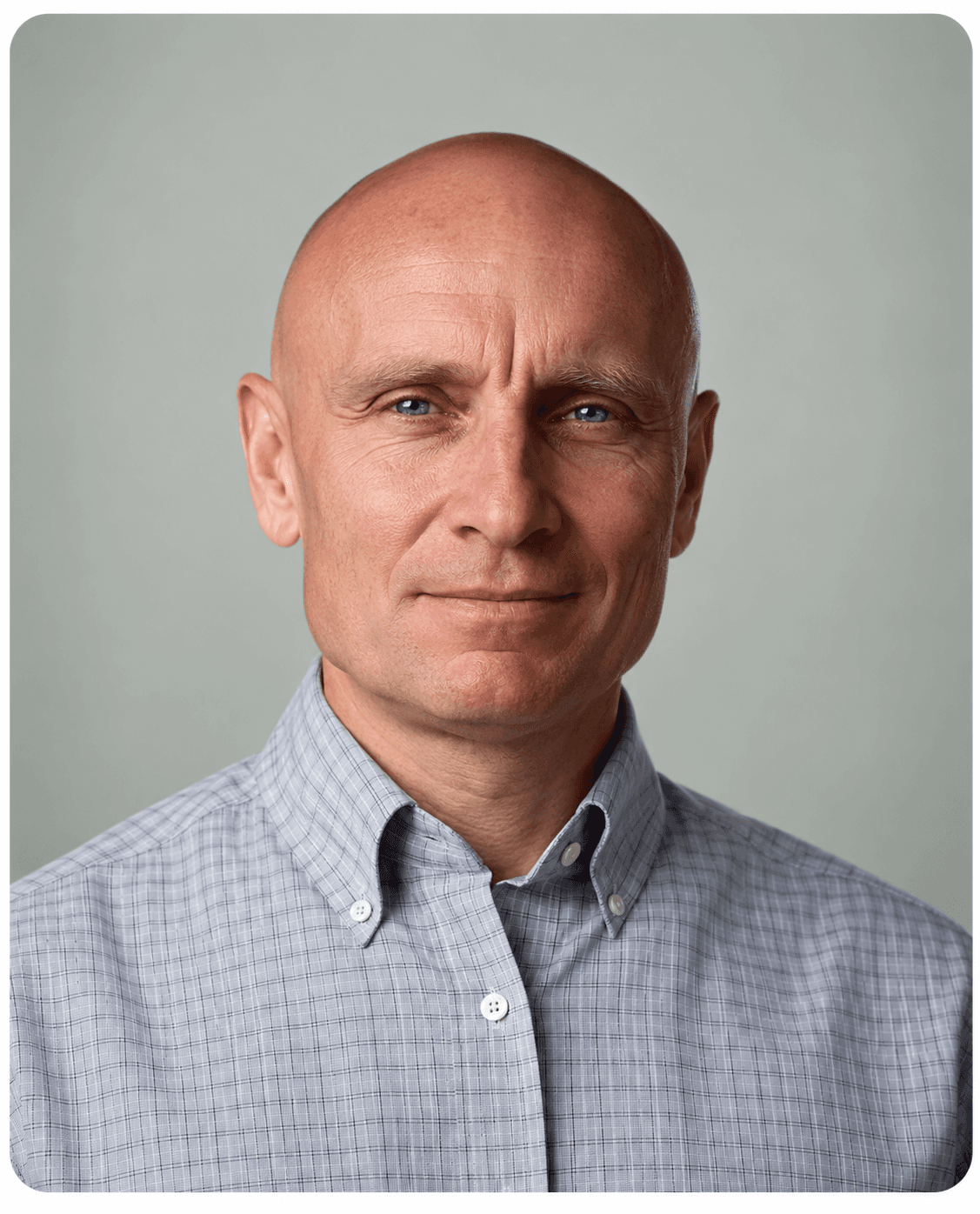
Mariusz Pelc, PhD, DSc (Habil.), is an Associate Professor at the Department of Artificial Intelligence, Wrocław University of Science and Technology. He is a computational scientist with more than 25 years of research experience in artificial intelligence, biomedical signal processing, automatic control, computer systems, and adaptive computing. His current work is focused primarily on machine learning and deep learning for biomedical engineering and medical applications, particularly on the analysis and interpretation of physiological and neurophysiological signals.
A major area of his recent research concerns EEG, fNIRS, and ECG signal analysis. His work includes machine-learning-based filtering and classification of fNIRS signals, multimodal analysis of brain activity, cognitive-state estimation, affective computing, EEG-based brain-computer interfaces, and investigation of potential electrophysiological biomarkers. Recent studies include machine-learning approaches for fNIRS processing, prediction of cognitive states from fNIRS, emotion analysis, EEG analysis related to dementia risk, stress detection, eye-movement recognition using EEG, and preliminary studies of EEG markers associated with neurological or psychiatric conditions.
A second research direction involves AI and NLP for medical and decision-support systems. This includes integration of machine-learning models with expert systems, AI-assisted diagnostic pipelines, and the use of natural language processing for extracting and analysing medically relevant information. More recently, his work has expanded towards large language models and generative AI, including retrieval-augmented generation, structured knowledge retrieval, trustworthy on-premise conversational systems, and the use of LLMs in automated detection of artificial or bot-generated content.
His research also builds on a long-standing background in adaptive and autonomic computing, embedded and real-time systems, network security, and anomaly detection. Earlier and continuing work in these areas includes self-configuring computer control systems, policy-based adaptation, IoT anomaly detection, and intelligent monitoring architectures. These topics increasingly intersect with his current interests in edge AI, neuromorphic computing, and adaptive intelligent systems.
He has participated in international and interdisciplinary projects funded under European and national programmes, including CHIST-ERA, EU FP6, CLARIN and UK-funded research projects. CV-3 He has published more than 120 peer-reviewed outputs and has supervised doctoral research in the UK and Poland.
His present research can therefore be summarised around four interconnected areas: AI for biomedical applications, neurophysiological signal analysis and BCI, NLP and LLM-based intelligent systems, and adaptive/edge intelligent computing.
Moim zdaniem ta ostatnia wersja trafia już znacznie lepiej w Twój aktualny profil, niż klasyczne CV-owe „automatic control + computer systems + biomedical engineering”. Z aktualnej listy publikacji widać dość wyraźny zwrot w stronę AI + biomedical/brain signals + LLM/NLP.
mgr inż. elektryk, specjalność automatyka i metrologia elektryczna
Politechnika Opolska
dr inż., automatyka i robotyka, specjalność komputerowe systemy sterowania
Akademia Górniczo-Hutnicza w Krakowie
PGCert in Higher Education
University of Greenwich, Londyn, UK
dr hab. inż., automatyka i robotyka, specjalność komputerowe systemy sterowania
M Pelc, T Kajdanowicz, AD Kawala-Sterniuk, S Stemplewski, W Bauer
ICCS 2026 362–369
M Pelc, K Adamczewski, KM Białas, R Chałupnik, D Krutul, DT Wolkiewicz, …
Applied Sciences 16(10), 1–16
AD Kawala-Sterniuk, M Pelc, M Podpora, M Baranowski
ICAART 2026 1, 228–235
AD Kawala-Sterniuk, M Pelc, M Podpora, M Baranowski, P Rogala, P Kawa, …
ICAART 2026 1, 220–227
M Pelc, KM Białas, T Kajdanowicz, AD Kawala-Sterniuk, W Bauer
IEEE 2025
AD Kawala-Sterniuk, M Piasecki, EK Rudnicka, M Pelc, M Podpora, D Mikołajewski, …
Applied Sciences 15(19), 1–18
T Kajdanowicz, M Pelc, AD Kawala-Sterniuk, A Luckiewicz, D Mikołajewski, R Roszczyk, …
ACIIDS 2025 275–288
M Pelc, AD Kawala-Sterniuk, D Mikołajewski, A Luckiewicz, A Sudoł, P Mendon, …
Technical Sciences 73(1), 1–8 · Cited by 1
AD Kawala-Sterniuk, M Pelc, M Myslicka, A Bryniarska, A Sudoł, M Podpora, …
Archives of Dermatological Research 316(99), 1–17 · Cited by 14
M Pelc, R Kahánková, M Błaszczyszyn, D Mikołajewski, M Konieczny, V Khoma, …, A Kawala‐Sterniuk
Scientific Reports · Cited by 11
AD Kawala-Sterniuk, M Pelc, K Barnova, M Mikolasova, RV Kahankova, R Jaros, …
Computers in Biology and Medicine 163(107135), 1–24 · Cited by 53
M Pelc, AD Kawala-Sterniuk, L Chopra, JS Chohan, S Sharma
Sensors 22(9), 1–26 · Cited by 14
AD Kawala-Sterniuk, M Pelc, R Martinek, G Wójcik
Frontiers in Neuroscience 16, 1–3 · Cited by 10
AD Kawala-Sterniuk, M Pelc, N Browarska, J Zygarlicki, M Podpora, R Martinek, …
Brain Sciences 11(1), 1–23 · Cited by 35
AD Kawala-Sterniuk, M Pelc, N Browarska, A Al-Bakri, J Zygarlicki, M Sidikova, …
Brain Sciences 11(1), 1–41 · Cited by 264
AD Kawala-Sterniuk, M Pelc, M Podpora, M Blaszczyszyn, EJ Gorzelanczyk, R Martinek, …
Sensors 20(3), 1–19 · Cited by 83